
Gas Hob vs Induction Hob in Singapore:
Which Should You Choose?
Gas hob vs induction hob for Singapore homes: how each works, plus cost, speed, safety, cleaning, cookware and checking your HDB or BTO supply.
- Quick answer
- How does a gas hob work?
- How does an induction hob work?
- Gas vs induction in Singapore: running cost and upfront cost
- Speed and heat control
- Induction: fast and precise
- Gas: visible flame and familiar control
- Safety: gas vs induction
- Cleaning: which hob is easier?
- HDB and BTO reality: check your kitchen supply first
- What cookware can you use with an induction hob?
- Gas hob vs induction hob: at a glance
- Which one should you choose?
- FAQ
- Is induction better than gas for cooking?
- Can I use my existing pots on an induction hob?
- Can I install a gas hob myself?
- Are BTO kitchens suitable for gas hobs?
- Final thoughts
Quick answer
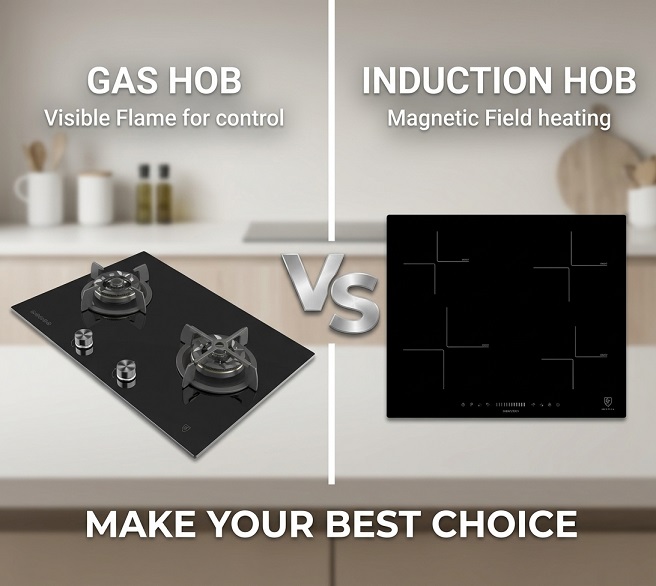
For Singapore homes, gas hob vs induction hob usually comes down to how you cook and what your kitchen already supports. Induction is fast, precise, easy to clean and generally safer around children and elderly family members. Gas gives you a visible flame, works with almost any cookware and remains a familiar choice for heavy wok cooking. Neither is universally better, so check your home's gas or electrical supply, cookware and cooking habits before deciding.
How does a gas hob work?
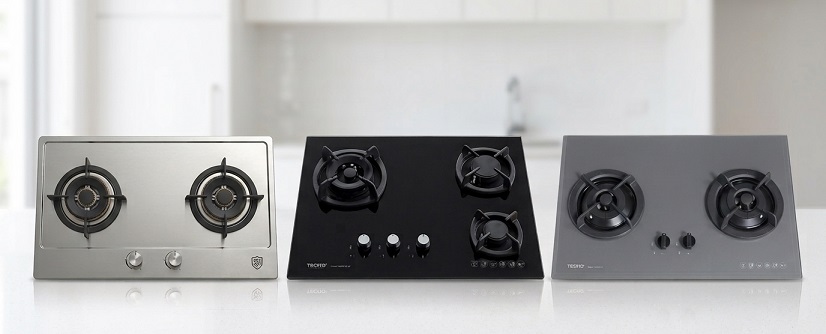
A gas hob burns gas to create a flame underneath the cookware. The heat from the flame then transfers through the base of the pot or pan.
In Singapore, gas hobs may be connected to town gas or LPG, depending on the home's setup.
One advantage is that you can see the flame while cooking. Turning the control changes the flame, giving you a familiar way to judge and adjust the heat.
Gas also works with a wide range of cookware. Whether you use stainless steel, aluminium, cast iron or a traditional wok, you generally do not need to worry about magnetic compatibility.
For homeowners who regularly cook with a wok, stir-fry at high heat or do heavy frying, this familiar cooking method can be an important consideration. Browse our gas cooker hobs.
How does an induction hob work?
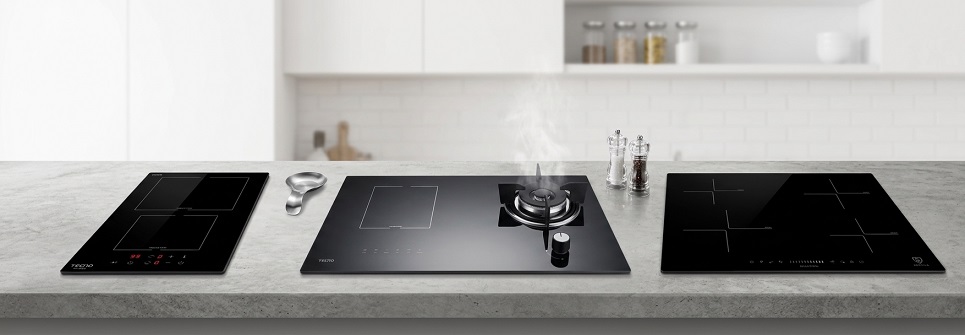
An induction hob uses electromagnetic energy to heat the cookware directly.
Instead of producing a flame and transferring heat through the air, the induction zone creates a magnetic field that heats a compatible pot or pan.
This makes induction cooking very responsive. When you increase or reduce the setting, the cookware responds quickly, allowing you to make precise heat adjustments.
However, induction does have one important requirement: your cookware must be induction-compatible.
A simple way to check many pots and pans is to place a magnet against the base. If the magnet sticks firmly, the cookware is generally suitable for induction. You should still check the cookware manufacturer's instructions where possible. See our induction hobs.
Gas vs induction in Singapore: running cost and upfront cost
Running costs depend on several factors, including your cooking habits, the efficiency of the appliance and the current cost of your gas or electricity supply.
Gas and electricity are charged differently in Singapore, so there is no single running-cost figure that applies to every household.
Induction can be very efficient because the cooking energy is transferred directly to the cookware rather than first producing a flame. Gas, however, may still be a practical choice for households already equipped with a suitable gas supply.
The upfront cost can also differ between individual gas and induction hob models. Do not choose based on the purchase price alone. Consider whether you need to change cookware, arrange a suitable gas connection or make electrical changes to support the hob.
For a renovation, it is sensible to consider the total kitchen setup rather than looking only at the hob itself.
Speed and heat control
Induction: fast and precise
One of the main reasons homeowners choose induction is its speed and control.
The cookware is heated directly, so induction can respond quickly when you change the heat setting. This is useful when you need to move from high heat to gentle simmering without waiting for a flame to settle.
Induction can also provide very consistent heat, which is useful for everyday cooking such as boiling, simmering and pan-frying.
Gas: visible flame and familiar control
Gas gives you something induction does not: a visible flame.
Many people find this intuitive. You can immediately see whether the flame is high or low and adjust it using the control knob.
Gas is also suitable for a broad range of cookware and cooking styles. If you regularly use a wok or prefer cooking over a strong flame, gas may feel more natural.
Safety: gas vs induction
Safety is another important difference when comparing gas vs induction in Singapore.
An induction hob does not produce an open flame. The cooking surface can still become hot because heat from the cookware transfers back to the glass, but the surface generally becomes cooler faster once the cookware is removed. Many induction hobs also have safety features such as automatic shut-off.
This can be particularly useful for households with young children or elderly family members.
Gas hobs have an open flame and require a gas supply. This means there are additional considerations when installing and using the hob.
Gas hob connection and installation must be carried out by a certified gas service worker. Do not attempt to connect a gas hob yourself.
For any gas installation, follow the applicable safety requirements and the appliance manufacturer's instructions.
Cleaning: which hob is easier?
If easy cleaning is important to you, induction has a clear practical advantage.
The surface of an induction hob is generally a flat glass cooking surface. Once it has cooled sufficiently, spills and splashes can usually be wiped away without having to remove separate components.
A gas hob has more parts to clean.
Food and grease can collect around the burners, pan supports and other areas of the hob. The trivets and burner components may need to be removed and cleaned separately.
For households that cook frequently, especially with frying or stir-frying, this difference can become noticeable over time.
HDB and BTO reality: check your kitchen supply first
Before choosing between gas and induction, check what your home actually supports.
Some Singapore homes have access to town gas, while others use LPG. Some newer BTO homes may be designed with electric-only cooking, so you should confirm the available supply before buying a gas hob.
For an existing flat, check your current kitchen setup.
For a new BTO or renovation, confirm the available cooking supply with the relevant parties before making your purchase.
Also consider the electrical requirements of the induction hob you are considering. A higher-powered appliance may have specific electrical requirements, so these should be checked before installation.
In other words, do not choose the hob first and only check the kitchen supply afterwards.
What cookware can you use with an induction hob?
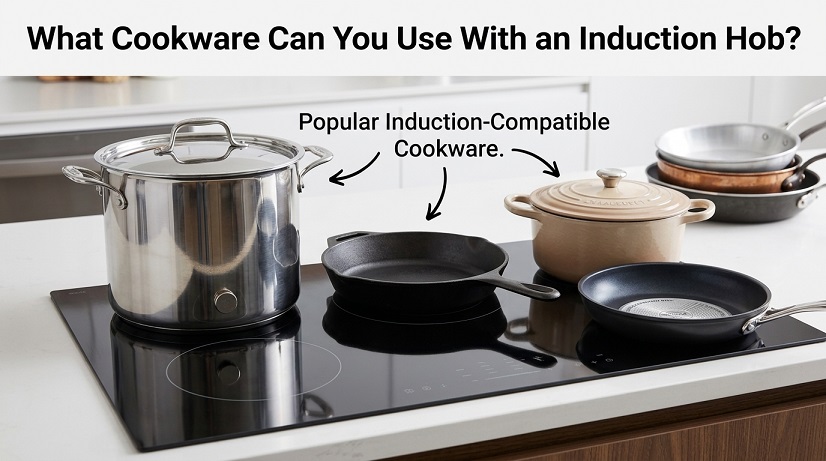
Induction cookware needs a magnetic base.
Common examples of cookware that may work with induction include:
- Cast iron cookware
- Magnetic stainless steel cookware
- Some enamelled cookware with a magnetic base
- Other cookware specifically labelled as induction-compatible
Some aluminium, copper, glass and non-magnetic stainless steel cookware will not work unless they have a suitable magnetic base.
If you are renovating your kitchen and already own several pots and pans, check them before switching to induction. Replacing unsuitable cookware is an extra consideration that is easy to overlook.
Gas hob vs induction hob: at a glance
| Feature | Gas hob | Induction hob |
|---|---|---|
| Heat source | Gas flame | Electromagnetic heating |
| Heat control | Visible flame and adjustable control | Fast and precise electronic control |
| Speed | Fast, depending on burner and cookware | Generally very fast |
| Flame | Yes | No |
| Cookware | Works with most cookware | Requires induction-compatible cookware |
| Wok cooking | Familiar choice for wok cooking | Depends on hob design and compatible cookware |
| Surface | Burners and trivets | Flat glass surface |
| Cleaning | More parts to clean | Generally easier to wipe clean |
| Safety | Open flame and gas supply | No open flame, with safety features on many models |
| Installation | Gas connection required where applicable | Electrical supply required |
| HDB/BTO consideration | Check for town gas or LPG availability | Check electrical requirements |
| Best suited to | People who prefer flame cooking and broad cookware compatibility | People who prioritise speed, precision and easy cleaning |
Which one should you choose?
Choose a gas hob if you:
- Prefer cooking with a visible flame
- Regularly use a wok or cook with high heat
- Want broad cookware compatibility
- Already have a suitable gas supply
- Are comfortable with the additional cleaning of burners and trivets
Choose an induction hob if you:
- Want fast and precise heat control
- Prefer a flat surface that is easier to clean
- Want to avoid an open flame
- Have children or elderly family members at home
- Are comfortable using induction-compatible cookware
- Have a suitable electrical supply
For many homeowners, the decision is less about which technology is better and more about which one fits their kitchen, cookware and cooking habits.
FAQ
Is induction better than gas for cooking?
Not necessarily. Induction is fast, precise and easy to clean, while gas provides a visible flame, broad cookware compatibility and a familiar cooking experience. Your cooking style should guide the decision.
Can I use my existing pots on an induction hob?
Only if they have a suitable magnetic base. Cast iron and many magnetic stainless steel pots work with induction, while some aluminium, copper, glass and non-magnetic stainless steel cookware does not.
Can I install a gas hob myself?
No. Gas hob connection and installation must be carried out by a certified gas service worker. Make sure your home's gas supply and installation requirements are confirmed before purchasing.
Are BTO kitchens suitable for gas hobs?
It depends on the individual development and kitchen supply. Some newer BTO homes may be electric-only, while other homes may have access to town gas or use LPG. Always confirm the available supply before buying a gas hob.
Final thoughts
When comparing gas hob vs induction hob, there is no single answer for every Singapore household. Gas remains a practical choice for homeowners who enjoy flame cooking, wok cooking and the flexibility of using different cookware. Induction is attractive if you prioritise speed, precise control, easier cleaning and cooking without an open flame.
For a new BTO or kitchen renovation, start by checking your available gas and electrical supply. Then consider your cookware and the way you actually cook every day. That will make the choice between gas and induction much clearer.
Ready to choose? Browse our cooker hobs and induction hobs, and pair your hob with a cooker hood for a complete kitchen setup.
Related guides: How to Choose a Cooker Hob · How to Choose a Cooker Hood.

Product tips and buying guides from the SG Appliances team.